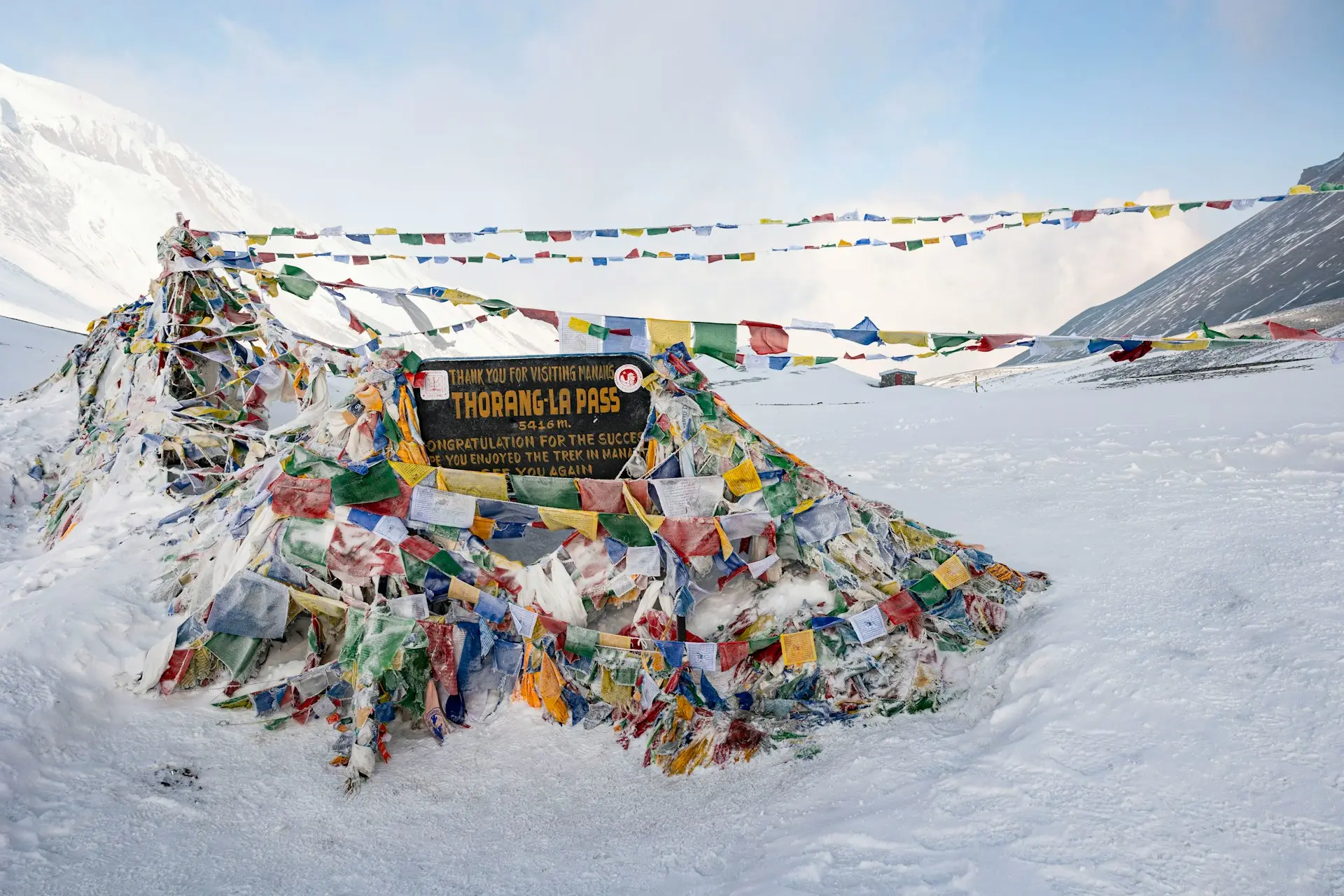
The Annapurna Circuit Trek is one of Nepal’s most celebrated Himalayan adventures, offering an extraordinary combination of mountain scenery, traditional villages, diverse landscapes, and rich cultural experiences. Organized by Nepal Everest Trek, this 17-day journey takes trekkers from the bustling Kathmandu Valley through the dramatic valleys and high mountains of the Annapurna region, crossing the challenging Thorong La Pass at approximately 5,416 meters (17,769 feet) before descending toward the sacred pilgrimage destination of Muktinath and continuing through the beautiful lower Mustang and Annapurna landscapes.
The trek is remarkable for its incredible geographical and cultural diversity. Along the route, the landscape changes from subtropical valleys and terraced farmland to pine forests, alpine meadows, barren high-altitude terrain, and spectacular Himalayan scenery. Trekkers encounter impressive peaks, traditional settlements, Buddhist monasteries, Hindu pilgrimage sites, and communities with distinctive Himalayan traditions.
Crossing the famous Thorong La Pass.
Exploring Manang and its surrounding Himalayan villages.
Views of Annapurna, Gangapurna, Dhaulagiri, and other major peaks.
Visiting the sacred temple area of Muktinath.
Relaxing in the natural hot springs of Tatopani.
Trekking through the rhododendron forests around Ghorepani.
Experiencing the traditional Gurung village of Ghandruk.
Introduction to the Annapurna Circuit Trek
The Annapurna Circuit Trek is a classic long-distance Himalayan trek that traditionally circumnavigates the Annapurna massif. The journey passes through several climatic and geographical zones, making it particularly attractive for trekkers who want to experience the remarkable diversity of the Nepalese Himalayas within a single adventure.
With the Nepal Everest Trek, the itinerary combines trekking with necessary road transportation to create a practical 17-day journey. After arriving in Kathmandu and completing sightseeing and trek preparation, the adventure begins with a drive toward the Marsyangdi Valley. From there, the trail gradually gains elevation through Jagat, Dharapani, Chame, Pisang, and Manang before reaching the high-altitude settlements of Yak Kharka and Thorong Phedi.
The itinerary then reaches its major milestone at Thorong La Pass before descending to Muktinath. The journey continues by road to Tatopani and then resumes on foot toward Ghorepani, Tadapani, and Ghandruk before finishing in Pokhara.
The trek combines:
High-altitude Himalayan trekking.
Traditional village experiences.
Buddhist and Hindu cultural heritage.
Dramatic changes in scenery and vegetation.
Mountain views and alpine landscapes.
A challenging high-pass crossing.
Why Choose the Annapurna Circuit Trek?
The Annapurna Circuit is appealing because it provides much more than a mountain-view trek. The route offers an evolving experience in which the scenery, architecture, vegetation, climate, and culture change noticeably as trekkers gain and lose elevation. The combination of challenging mountain terrain and cultural encounters makes every stage of the journey distinctive.
Another major attraction is the opportunity to experience the dramatic transition from the lower Marsyangdi Valley to the high Himalayan environment around Manang and Thorong Phedi. After crossing Thorong La, the landscape changes again as the trail enters the Mustang region and eventually reaches the warmer valleys around Tatopani.
Major reasons trekkers choose this route include:
Spectacular views of the Annapurna and Dhaulagiri ranges.
The adventure of crossing Thorong La Pass.
Diverse landscapes within one trekking itinerary.
Traditional Himalayan villages and local lifestyles.
Important religious and cultural sites.
Natural hot springs at Tatopani.
The scenic villages and forests around Ghorepani and Ghandruk.
Where Is the Annapurna Circuit?
The Annapurna Circuit is located in central Nepal within and around the Annapurna mountain region. The route passes through parts of the districts surrounding the Annapurna massif and follows valleys, mountain trails, villages, and high-altitude passes. The journey begins with access from Kathmandu and travels toward the Marsyangdi Valley before continuing northward toward Manang.
The route reaches its highest point at Thorong La Pass, which connects the Manang side with the Muktinath and Mustang side of the mountains. After descending to Muktinath, the itinerary uses road transportation toward Tatopani and then returns to trekking trails through the Ghorepani and Ghandruk areas before ending in Pokhara.
Key locations on this itinerary include:
Kathmandu – arrival, sightseeing, and preparation.
Syange/Jagat – starting point of the main trekking section.
Dharapani and Chame – important settlements in the Marsyangdi Valley.
Pisang and Manang – major high-altitude stops.
Yak Kharka and Thorong Phedi – high-altitude acclimatization stages.
Thorong La – the highest point of the trek.
Muktinath – important Hindu and Buddhist pilgrimage site.
Tatopani – famous for its natural hot springs.
Ghorepani, Tadapani, and Ghandruk – scenic villages in the lower Annapurna region.
Pokhara – final major destination before returning to Kathmandu.
Best Time to Trek the Annapurna Circuit
The best seasons for the Annapurna Circuit are generally spring and autumn, when trekking conditions are usually favorable, and mountain visibility is often excellent. Spring, particularly March to May, brings increasingly warm conditions in the lower elevations and blooming rhododendrons, while autumn, especially October and November, generally offers stable weather and clear Himalayan views.
Winter can bring very cold conditions and heavy snow around the high passes, while the summer monsoon season can produce rain, muddy trails, cloud cover, and occasional landslides in lower sections. Conditions can vary significantly between the lower valleys and the high-altitude sections, so trekkers should consider the entire route rather than conditions in Kathmandu alone.
Seasonal considerations:
Spring: Pleasant trekking conditions and blooming rhododendrons.
Autumn: Generally clear skies and excellent mountain visibility.
Winter: Cold temperatures and possible heavy snow around Thorong La.
Monsoon: Rain and cloud cover can affect lower sections and transportation.
High pass: Conditions around Thorong La should always be checked before crossing.
Annapurna Circuit Trek Route and Itinerary
The 17-day itinerary offered by Nepal Everest Trek combines road travel, trekking, acclimatization, and sightseeing. The route gradually gains altitude, allowing trekkers to adapt before reaching the highest section of the journey. The Manang rest day is particularly important because the itinerary then continues toward Yak Kharka, Thorong Phedi, and the high Thorong La crossing.
After the pass, the route descends significantly to Muktinath and continues by road to Tatopani. The final trekking section passes through Ghorepani, Tadapani, and Ghandruk before reaching Nayapul and continuing by vehicle to Pokhara. The following day is dedicated to the return drive from Pokhara to Kathmandu, with final departure on Day 17.
17-Day Route:
Day 1: Arrival in Kathmandu (1,300m/4,264 ft) and transfer to hotel.
Day 2: Kathmandu sightseeing and trek preparation.
Day 3: Drive from Kathmandu to Syange/Jagat (1,100m/3,608 ft), approximately 8–10 hours.
Day 4: Trek from Syange/Jagat to Dharapani (1,960m/6,430 ft), approximately 7–8 hours.
Day 5: Trek from Dharapani to Chame (2,710m/8,891 ft), approximately 5–6 hours.
Day 6: Trek from Chame to Pisang (3,300m/10,824 ft), approximately 5–6 hours.
Day 7: Trek from Upper Pisang to Manang (3,500m/11,482 ft), approximately 6–7 hours.
Day 8: Rest and acclimatization day in Manang.
Day 9: Trek from Manang to Yak Kharka (4,110m/13,484 ft), approximately 3–4 hours.
Day 10: Trek from Yak Kharka to Thorong Phedi (4,600m/15,092 ft), approximately 3–4 hours.
Day 11: Trek from Thorong Phedi across Thorong La to Muktinath (3,800m/12,467 ft), approximately 7–8 hours.
Day 12: Drive from Muktinath to Tatopani (1,200m/3,937 ft), approximately 6–8 hours.
Day 13: Trek from Tatopani to Ghorepani (2,850m/9,350 ft), approximately 7–8 hours.
Day 14: Trek from Ghorepani to Tadapani (2,710m/8,891 ft), approximately 6–7 hours.
Day 15: Trek from Tadapani through Ghandruk to Nayapul, approximately 6–7 hours, followed by a 1-hour drive to Pokhara (850m/2,789 ft).
Day 16: Drive from Pokhara to Kathmandu, approximately 6 hours.
Day 17: Final departure from Nepal.
This itinerary provides a varied Himalayan experience, progressing from Kathmandu and the lower Marsyangdi Valley to the high-altitude environment of Manang and Thorong La, followed by a descent through Muktinath and the scenic Annapurna foothills.
Highlights of the Annapurna Circuit Trek
The Annapurna Circuit Trek with Nepal Everest Trek is a diverse Himalayan adventure that combines dramatic mountain scenery, high-altitude landscapes, traditional villages, cultural heritage, and changing ecosystems. One of the defining features of the journey is the remarkable variety encountered along the trail, from lush valleys and forests to dry alpine terrain and snow-covered mountain passes.
The trek also provides opportunities to experience the daily life and traditions of communities living in the Annapurna region. As the route progresses through places such as Dharapani, Chame, Pisang, Manang, Muktinath, Ghorepani, and Ghandruk, trekkers encounter different landscapes, architectural styles, religious traditions, and local customs.
Key highlights include:
Thorong La Pass crossing at approximately 5,416 meters.
Panoramic views of the Annapurna and Dhaulagiri ranges.
Traditional Himalayan villages and mountain communities.
Buddhist monasteries and Hindu pilgrimage sites.
Changing vegetation and landscapes with altitude.
Rhododendron forests around the lower Annapurna region.
Natural hot springs at Tatopani.
Crossing Thorong La Pass
Crossing Thorong La Pass is the defining high-altitude challenge of the Annapurna Circuit. At approximately 5,416 meters (17,769 feet), it is the highest point of this itinerary and connects the Manang side of the circuit with the Muktinath area. The journey normally begins early from Thorong Phedi so trekkers can cross the pass and descend to Muktinath within the same day.
The ascent is demanding because of the altitude, cold temperatures, steep terrain, and potentially changing mountain weather. The gradual acclimatization schedule, including a rest day in Manang, is an important part of preparing for this section. Once at the pass, trekkers can experience expansive views of the surrounding Himalayan landscape before beginning the descent toward Muktinath.
Thorong La highlights:
Elevation of approximately 5,416 meters.
Dramatic high-altitude mountain terrain.
Early-morning ascent and pass crossing.
Panoramic views from the pass area.
Descent toward the culturally significant Muktinath region.
Landscapes and Mountain Views Along the Trail
The Annapurna Circuit is known for its exceptional landscape diversity. The lower section around the Marsyangdi Valley features rivers, waterfalls, terraced fields, forests, and steep green hills. As the trail climbs toward Chame, Pisang, and Manang, the vegetation becomes increasingly sparse, and the scenery transitions into an alpine environment.
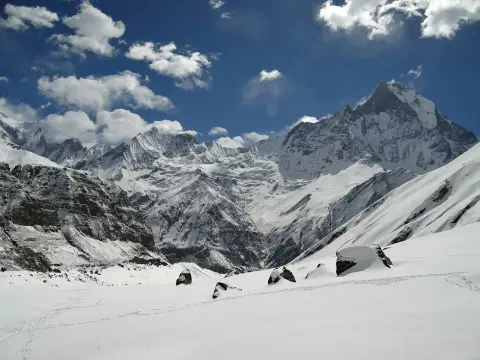
The mountain views become particularly impressive around the upper sections of the trail. Depending on location and weather conditions, trekkers can see peaks and mountain formations associated with the Annapurna range, Gangapurna, Dhaulagiri, and other Himalayan summits. After crossing Thorong La, the scenery changes again as the route descends toward Muktinath and the drier landscapes of Mustang.
Landscape highlights include:
Lush river valleys in the lower elevations.
Pine, fir, and rhododendron forests.
Alpine meadows and high mountain terrain.
Dramatic cliffs and deep Himalayan valleys.
Snow-covered peaks and mountain panoramas.
Dry, rugged landscapes around Muktinath and Mustang.
Green foothills and forests around Ghorepani and Ghandruk.
Villages, Culture, and Local Life
One of the most memorable aspects of the Annapurna Circuit is the opportunity to pass through traditional Himalayan settlements. Villages such as Dharapani, Chame, Pisang, Manang, and Muktinath reflect the diverse cultural heritage of the region. Local houses, prayer flags, mani walls, monasteries, temples, and mountain trails provide glimpses into longstanding Himalayan traditions.
The route also passes through areas influenced by several ethnic and cultural communities, including Gurung, Magar, and communities with strong Tibetan Buddhist traditions. In the lower sections near Ghorepani and Ghandruk, trekkers can experience village life surrounded by terraced fields and forests, while the upper Manang and Mustang areas feature architecture and cultural practices adapted to the high-altitude environment.
Cultural experiences include:
Visiting traditional mountain villages.
Observing Buddhist prayer wheels and mani walls.
Exploring monasteries and religious sites.
Experiencing Gurung and other local traditions.
Seeing traditional Himalayan architecture.
Visiting the sacred pilgrimage area of Muktinath.
Staying in locally operated teahouses and lodges.
Wildlife and Natural Beauty of the Annapurna Region
The Annapurna region contains a wide range of habitats because of its dramatic variation in elevation and climate. The trek passes through subtropical forests, temperate woodland, alpine meadows, and high-altitude environments. This ecological diversity supports numerous species of birds, mammals, and plant life, although wildlife sightings in the mountains are naturally unpredictable.
The lower and middle sections of the trail are particularly rich in vegetation, with rhododendrons, pine, oak, and other Himalayan plant species appearing at different elevations. The forests around Ghorepani and the surrounding Annapurna foothills are especially scenic during spring when rhododendrons bloom. Higher sections become progressively more rugged and sparsely vegetated as the altitude increases.
Natural highlights include:
Diverse Himalayan forests and vegetation.
Rhododendron forests in the lower Annapurna region.
Alpine meadows and high-altitude ecosystems.
Himalayan birds and other native wildlife.
Waterfalls, rivers, and mountain streams.
Dramatic changes in flora with elevation.
Panoramic Himalayan scenery throughout the journey.
Annapurna Circuit Trek Difficulty and Challenges
The Annapurna Circuit Trek with Nepal Everest Trek is considered a challenging Himalayan trekking adventure because of its long walking days, changing terrain, significant elevation gain, and the crossing of Thorong La Pass at approximately 5,416 meters (17,769 feet). Trekkers should have a reasonable level of fitness and be comfortable walking for several hours a day on mountain trails. The difficulty varies throughout the journey, with the highest sections around Manang, Yak Kharka, Thorong Phedi, and Thorong La requiring particular attention.
Altitude is one of the most important challenges. The itinerary includes a rest and acclimatization day in Manang before continuing toward higher elevations. Trekkers should maintain a steady pace, stay hydrated, avoid unnecessary exertion, and pay attention to symptoms of altitude sickness. Weather can also change rapidly at higher elevations, so appropriate clothing and flexibility are essential.
Main challenges include:
Long trekking days and varied terrain.
Significant elevation gain and loss.
Crossing Thorong La Pass at high altitude.
Cold, wind, and rapidly changing mountain weather.
Steep ascents and descents.
Possible altitude-related symptoms.
Limited facilities in remote sections.
Accommodation, Food, and Facilities on the Trail
Accommodation along the Annapurna Circuit is generally provided by locally operated teahouses and trekking lodges. These establishments offer a practical place to sleep, eat, and rest after a day on the trail. Rooms are commonly simple and may include twin beds, blankets, and shared bathroom facilities, although facilities can vary between villages and elevations.
Food is available at most established stops along the route. Typical menus include traditional Nepali dishes such as dal bhat, as well as noodles, soups, rice, vegetables, potatoes, eggs, bread, and other simple trekking meals. In larger settlements, trekkers may find a broader selection of food and basic services, while facilities become more limited at higher elevations.
Typical trail facilities include:
Teahouse and lodge accommodation.
Twin-sharing rooms in many trekking villages.
Shared bathrooms in many locations.
Nepali and international-style meals.
Tea, coffee, and other hot beverages.
Small shops in larger settlements.
Charging facilities in selected lodges.
Limited internet or mobile connectivity in some areas.
Permits and Preparation for the Annapurna Circuit
Trekkers need the appropriate permits and documentation before beginning the Annapurna Circuit. Requirements can change, so Nepal Everest Trek can assist trekkers with checking the current regulations and arranging the necessary trekking documentation before departure. Carrying valid identification and keeping important documents accessible throughout the trek is also recommended.
Good preparation should cover physical fitness, travel insurance, equipment, altitude awareness, and an understanding of the daily itinerary. Because the trek reaches a high elevation, preparation should focus not only on endurance but also on walking comfortably for several consecutive days while carrying or using a trekking pack.
Important preparation areas include:
Obtain the required trekking permits.
Arrange suitable travel insurance.
Prepare appropriate trekking clothing and equipment.
Build cardiovascular and leg strength before departure.
Practice walking on hills or uneven terrain.
Prepare for cold and changing weather.
Learn basic altitude sickness awareness.
Carry necessary personal medications and documents.
Essential Packing List for the Trek
Packing appropriately is important for comfort and safety on the Annapurna Circuit. The trek passes through warm lower valleys as well as cold, windy, and potentially snowy high-altitude areas, so trekkers need a layered clothing system. A good packing strategy should provide warmth without making the backpack unnecessarily heavy.
Nepal Everest Trek recommends preparing equipment according to the season and current mountain conditions. Essential items should include appropriate trekking clothing, footwear, personal hygiene supplies, water equipment, sun protection, and basic emergency items. The exact requirements can vary depending on whether a porter is being used and the time of year.
Essential packing items include:
Comfortable, broken-in trekking boots.
Warm base layers and insulating layers.
Waterproof and windproof jacket and trousers.
Trekking trousers and comfortable shirts.
Warm hat, gloves, and sun hat.
Good-quality trekking socks.
Sleeping bag suitable for the expected temperatures.
Sunglasses and sunscreen.
Reusable water bottles or hydration system.
Water purification tablets or a suitable filter.
Headlamp with spare batteries.
Trekking poles.
Personal first-aid and medication supplies.
Toiletries and quick-drying towel.
Power bank and charging accessories.
Passport, permits, insurance documents, and cash.
Conclusion: A Journey Through the Himalayas
The Annapurna Circuit Trek is a journey that brings together high mountain landscapes, traditional villages, cultural heritage, and changing natural environments. From the lower Marsyangdi Valley to the high-altitude trails of Manang and the demanding crossing of Thorong La Pass, each stage presents a different perspective of the Nepalese Himalayas.
The journey continues beyond the high pass toward the sacred area of Muktinath, the hot springs of Tatopani, and the beautiful forests and villages around Ghorepani, Tadapani, and Ghandruk. With thoughtful preparation, appropriate equipment, acclimatization, and support from Nepal Everest Trek, trekkers can experience the remarkable diversity of the Annapurna region while respecting the challenges of high-altitude mountain travel.
The Annapurna Circuit offers:
A memorable Himalayan trekking experience.
The challenge of crossing Thorong La Pass.
Spectacular mountain and valley scenery.
Encounters with diverse Himalayan cultures.
Traditional villages and teahouse experiences.
Varied landscapes from subtropical valleys to alpine terrain.
Lasting memories of one of Nepal’s classic trekking routes.