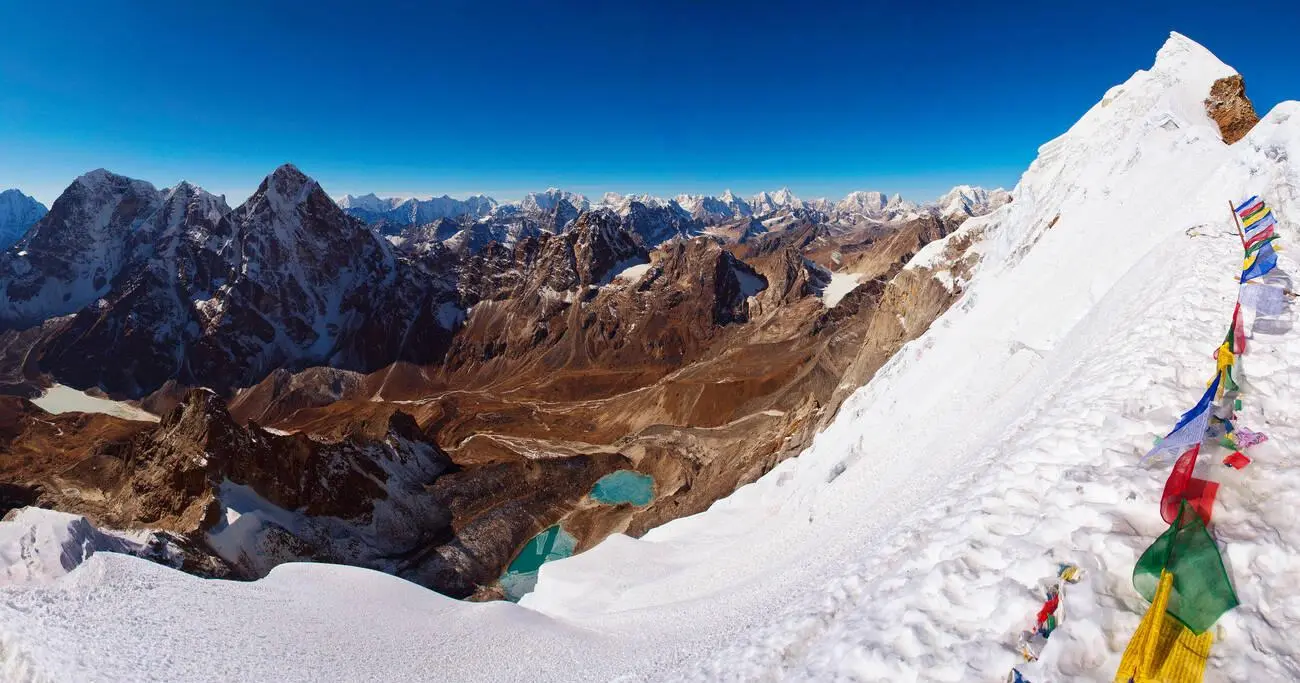
Lobuche Peak, standing at 6,119 meters (20,075 feet), is one of the most popular trekking peaks in the Everest region of Nepal. It offers climbers an incredible high-altitude adventure combined with panoramic views of some of the world's highest peaks, including Mount Everest, Lhotse, Nuptse, and Ama Dablam. This climb is classified as a trekking peak by the Nepal Mountaineering Association, making it accessible to climbers with basic mountaineering experience and proper acclimatisation.
The climb typically starts from Lobuche High Camp, which is reached after several days of trekking through the Khumbu Valley. Climbers experience a gradual increase in altitude, allowing their bodies to adjust and minimise the risk of altitude sickness. The summit push usually begins early in the morning to avoid afternoon winds and rapidly changing weather conditions. On reaching the top, adventurers are rewarded with awe-inspiring sunrise views over the Himalayan peaks. The descent is equally scenic, passing through glaciers and rugged mountain terrain back to Lobuche village.
The ideal seasons for climbing Lobuche Peak are pre-monsoon (March to May) and post-monsoon (late September to November). During these months, the skies are generally clear, offering unobstructed views of the surrounding Himalayan peaks. The pre-monsoon season provides blooming rhododendron forests along the trekking trail, while the post-monsoon season ensures stable weather and dry conditions, which are crucial for safe climbing.
Winter climbs (December to February) are possible but are extremely cold, with heavy snowfall, strong winds, and limited daylight. The summer or monsoon season (June to August) is not recommended due to heavy rainfall, landslides, and increased risk of avalanches, making both trekking and climbing dangerous. Proper planning around these seasons ensures not only safety but also the best photographic opportunities and a more enjoyable experience.
Short Points:
Climbing Lobuche Peak is considered a moderate trekking peak. It requires basic mountaineering skills such as using crampons, ice axes, and fixed ropes. Physical fitness, prior trekking experience, and proper acclimatisation are essential to handle the high altitude, crevasses, and icy slopes encountered near the summit. The final summit push involves technical climbing on snow and rock, but it is manageable with guidance from experienced mountaineering instructors.
Transportation for Lobuche Peak Climbing typically begins with a flight from Kathmandu to Lukla, followed by a trek through the Khumbu region. This route passes through picturesque Sherpa villages, suspension bridges, and rhododendron forests. After reaching Lobuche village, climbers hike to Lobuche High Camp, which serves as the base for the summit attempt. Descending is relatively straightforward, following the same trekking path back to Lukla for the return flight to Kathmandu.
Short Points:
During the approach trek to Lobuche Peak, climbers stay in teahouses and lodges along the trail. These lodges offer basic yet comfortable accommodation with hot showers, Wi-Fi (in some places), and meals like Dal Bhat, noodles, soups, and pasta. At Lobuche High Camp, accommodation is more rustic, often in tents or simple stone shelters, as facilities are limited at higher altitudes.
Food during the climb is usually high-calorie, energy-rich meals to meet the energy demands of high-altitude trekking and climbing. It’s important to stay hydrated and maintain a balanced diet, including carbohydrates, proteins, and fats. The climbing team, provided by Nepal Everest Trek, ensures proper meal planning and support throughout the expedition to keep climbers energised and healthy.
Short Points:
Climbing Lobuche Peak requires several permits, which are obtained through the Nepal Mountaineering Association (NMA) and local authorities. The main permits include:
These permits are mandatory for all climbers and ensure safety regulations, environmental protection, and legal climbing authorization. The costs vary depending on nationality and duration of stay. Nepal Everest Trek handles all the necessary paperwork and submission in advance, allowing climbers to focus on preparation and acclimatisation without administrative stress.
Short Points:
Climbing Lobuche Peak with Nepal Everest Trek provides a perfect combination of adventure, safety, and scenic beauty. The expedition offers climbers the chance to experience high-altitude mountaineering without extreme technical difficulty, making it ideal for enthusiastic trekkers seeking a summit experience. The route traverses iconic Sherpa villages, monasteries, and Himalayan landscapes, providing cultural immersion alongside physical challenge.
Nepal Everest Trek’s team consists of experienced guides, high-altitude porters, and mountaineering instructors who ensure climbers are safe, well-supported, and properly acclimatised. From arranging permits and transportation to meals and gear, the company offers a fully managed climbing experience, allowing adventurers to focus solely on reaching the summit. The peak also provides unparalleled views of Everest and the surrounding giants, making every effort worth the reward.
Short Points:
Upon arrival at Tribhuvan International Airport in Kathmandu, our team from Nepal Everest Trek will warmly welcome you and transfer you to your hotel in the city. This day is dedicated to rest and light exploration, allowing you to recover from your international flight. Later, you will attend a pre-trek briefing where the guides will provide detailed information about the Lobuche Peak climb, trekking route, safety protocols, and equipment. In the evening, you can enjoy authentic Nepali cuisine and prepare for the adventure ahead.
Early morning, we take a scenic flight from Kathmandu to Lukla, offering breathtaking views of the Himalayas, including Everest on a clear day. After landing, we begin our trek to Phakding along the Dudh Koshi River. The trail passes through small villages, suspension bridges, and lush pine forests. The first day of trekking allows your body to adjust to the altitude gradually. Upon arrival in Phakding, we settle into teahouses, enjoy a warm meal, and prepare for the longer trek to Namche Bazaar the next day.
Today’s trek is one of the most scenic and iconic sections of the Everest region. The trail winds through rhododendron forests, terraced fields, and numerous suspension bridges. Crossing the Dudh Koshi River several times, we gradually ascend toward Namche Bazaar, the vibrant Sherpa capital of the Khumbu. The village buzzes with markets, teahouses, and cultural charm. Upon arrival, there is time to explore the local shops, interact with residents, and enjoy panoramic views of Thamserku and other peaks. This evening, we rest and acclimatize for the days ahead.
We spend the day at Namche Bazaar to allow proper acclimatization to the increasing altitude. The morning may include a short hike to the Everest View Hotel or the nearby hills, offering stunning vistas of Everest, Lhotse, and Ama Dablam. Our guides also educate trekkers on high-altitude precautions and the importance of hydration and nutrition. In the afternoon, you can explore the local market, visit Buddhist monasteries, and experience Sherpa culture firsthand. A relaxed day of gentle walking and observation helps the body adjust and prepares us for the trek to Tengboche tomorrow.
Today’s trail is a moderate climb through pine forests and past Mani walls. We pass the picturesque village of Mong La and finally arrive at Tengboche, home to the famous Tengboche Monastery. The monastery, perched on a ridge, provides spiritual ambiance and panoramic mountain views. You can attend the evening prayer ceremony if timing allows. The trek offers breathtaking views of Ama Dablam, Everest, and Nuptse. Tengboche is a serene and picturesque location, perfect for photography and experiencing the peaceful atmosphere before we continue to Dingboche.
The journey today gradually ascends through alpine meadows and alongside the Imja Khola river. The trail takes you through Pangboche village, the highest traditional Sherpa village in the area, known for its monastery and traditional architecture. The air becomes thinner as we approach Dingboche, nestled in a valley surrounded by towering peaks like Ama Dablam and Island Peak. Upon arrival, we settle into our teahouse, hydrate, and prepare for tomorrow’s acclimatization hike. This day allows the body to adjust to a higher altitude while enjoying spectacular Himalayan scenery.
We dedicate today to acclimatization by hiking to Chukkung Valley, which offers panoramic views of Lhotse, Island Peak, and Ama Dablam. The gentle ascent helps your body adapt to the higher altitude while offering the opportunity to explore glacial moraines and alpine landscapes. Our guides provide tips on altitude sickness prevention, nutrition, and breathing techniques. Returning to Dingboche, you can relax and prepare for the next day’s trek. The combination of physical activity and rest ensures your body gradually adapts, increasing the chances of a successful Lobuche Peak climb.
The trail from Dingboche to Lobuche ascends gradually through a rugged and rocky landscape. Along the way, you will witness stunning views of Pumori, Nuptse, and the Khumbu Glacier. This is a higher-altitude trek, so the pace is slower to allow for proper acclimatization. Lobuche is a small settlement near the base of the peak and serves as the staging area for high-altitude climbs. Upon arrival, you can rest, check your climbing gear, and review the plan for the ascent. The surrounding peaks provide an inspiring backdrop for the adventure ahead.
Today is an iconic day as we trek to Gorak Shep, the last settlement before Everest Base Camp, and then hike to the base camp itself. The trail traverses glacial moraine, rugged terrain, and offers unmatched views of Everest, Lhotse, and Nuptse. At Everest Base Camp, you can witness climbers preparing for their ascents and soak in the sense of history and adventure. Returning to Gorak Shep for an overnight stay, we rest at a high altitude while marveling at the surrounding Himalayan giants. This day is both physically demanding and emotionally exhilarating.
An early morning hike to Kala Patthar provides arguably the best panoramic view of Mount Everest and the surrounding peaks. The sunrise over the Himalayas is a truly unforgettable experience. After taking photographs and enjoying the scenery, we descend back to Gorak Shep for breakfast and continue to Lobuche for an overnight stay. The trek down offers a chance to reflect on the journey and enjoy the changing landscapes. Proper rest and hydration are emphasized to prepare for the ascent of Lobuche Peak the following day.
We trek from Lobuche village to Lobuche High Camp, the final base for the peak climb. The path becomes rocky and glacial, requiring careful navigation. Along the way, we witness breathtaking views of surrounding peaks, crevasses, and ice formations. At High Camp, climbers review the technical aspects of the Lobuche Peak ascent with guides, check equipment, and acclimatize further. The evening is spent preparing gear, discussing the climbing strategy, and ensuring everyone is ready for the summit attempt early the next morning.
The summit day begins before dawn with a challenging climb across rock, ice, and snow. Guides ensure safety while leading climbers along the technical sections of the route. Reaching the summit of Lobuche Peak is a moment of triumph, offering panoramic views of the Everest region and surrounding giants. After celebrating at the top, we carefully descend back to High Camp. This is a long and physically demanding day, but the sense of accomplishment, stunning vistas, and personal achievement make it truly unforgettable.
After the summit climb, we descend to Pangboche, passing through glacial valleys and traditional Sherpa villages. The terrain becomes gentler, and the air feels lighter. Pangboche is known for its historic monastery and welcoming village atmosphere. This descent allows climbers to recover from the previous day’s exertion while enjoying the serene landscapes. Evenings are spent resting, sharing stories with fellow trekkers, and enjoying warm meals while preparing for the next day’s journey back toward Namche Bazaar.
We retrace the trail through Tengboche, passing pine forests and suspension bridges before returning to Namche Bazaar. The descent is easier but still requires careful footing. Reaching Namche offers a sense of accomplishment and a chance to enjoy the local shops, cafes, and cultural landmarks. This evening can be spent relaxing, reflecting on the trek, and celebrating the success of the Lobuche Peak climb. Guides provide tips on descending safely and preparing for the final leg of the journey to Lukla.
The trek from Namche Bazaar to Lukla is long but significantly downhill, offering spectacular views of the Everest region one last time. Villages, forests, and rivers line the route as we descend gradually toward Lukla. Upon arrival, trekkers are reunited with comfort, amenities, and the sense of completing a major portion of the adventure. This final trekking day allows for reflection on the journey, photography, and interactions with locals who have supported the expedition. A celebratory dinner marks the near-completion of the trek.
A scenic flight from Lukla back to Kathmandu offers aerial views of the towering Himalayas and glacial landscapes one last time. Upon arrival, we transfer to a hotel in Kathmandu for rest. The day can be spent exploring Thamel, purchasing souvenirs, or enjoying a traditional Nepali cultural show. This day marks the transition from the high mountains to city life, allowing travelers to rest, recover, and reflect on the remarkable experience of climbing Lobuche Peak and trekking in the Everest region.
After breakfast, you are transferred to Tribhuvan International Airport for your departure flight. Nepal Everest Trek ensures smooth airport transfers and assistance with luggage and check-in. This final day offers a moment to reminisce about the incredible journey, the friendships forged, and the memories of the Himalayan adventure. You leave Nepal with a sense of accomplishment, enriched by the breathtaking landscapes, cultural experiences, and the triumph of climbing Lobuche Peak.
Lobuche Peak is considered a technically moderate climb suitable for trekkers with some high-altitude trekking experience. While it does not require extensive mountaineering skills like Everest or Ama Dablam, it involves steep ice and rock sections, glacier travel, and use of crampons and ice axes. Physical fitness, stamina, and acclimatization to high altitudes are essential for a safe climb. Nepal Everest Trek ensures that climbers are guided by experienced Sherpa mountaineers who provide technical support and safety supervision throughout the ascent.
A good level of cardiovascular fitness, endurance, and strength is necessary to climb Lobuche Peak. The trek involves several days of uphill hiking at high altitudes, while the summit requires climbing steep rocky and icy slopes. Training before the expedition should include long hikes, stair climbing, running, or gym workouts focusing on legs and core strength. Nepal Everest Trek recommends at least 2–3 months of regular physical preparation to ensure you can safely manage altitude stress, carry your gear, and enjoy the journey.
While prior mountaineering experience is helpful, it is not strictly required to climb Lobuche Peak. The climb is classified as a trekking peak, meaning that technical skills such as using crampons, ice axes, and fixed ropes are necessary but can be learned with guidance. Nepal Everest Trek provides professional Sherpa guides who give hands-on training, lead the climb safely, and offer advice on technique and safety. However, trekkers must be comfortable with high-altitude climbing and prepared for physical challenges.
A typical Lobuche Peak expedition lasts about 16–17 days, including arrival in Kathmandu, acclimatization, trekking to Lobuche, summit attempt, and descent. The schedule allows for proper acclimatization, rest days, and gradual ascent to reduce the risk of altitude sickness. Nepal Everest Trek designs itineraries to maximize safety, enjoyment, and successful summits while balancing physical challenge and cultural experiences along the Everest region trails. The expedition also includes contingency days in case of weather delays.
Beginners with reasonable fitness and mental preparedness can attempt Lobuche Peak, but they must be willing to follow guide instructions carefully and commit to proper acclimatization. The climb involves steep terrain, icy slopes, and exposure to extreme weather, so cautious and attentive participants are crucial. Nepal Everest Trek offers guidance, training tips, and preparatory advice before departure, and provides technical support on the climb to make the expedition accessible for those new to mountaineering while maintaining a high standard of safety.
The Lobuche Peak expedition is not just a climb; it is also a journey through Sherpa culture. Trekkers visit traditional villages such as Namche Bazaar, Pangboche, and Tengboche, exploring Buddhist monasteries, local markets, and interacting with villagers. Nepal Everest Trek emphasizes cultural immersion alongside adventure, allowing trekkers to experience local festivals, learn about Sherpa history, and enjoy authentic Nepali cuisine. The combination of natural beauty and cultural richness enhances the overall experience and creates lasting memories beyond the summit achievement.
The success rate for Lobuche Peak is generally high when climbers follow proper acclimatization schedules, maintain fitness, and are guided by experienced Sherpa mountaineers. On average, 70–85% of climbers reach the summit, though weather conditions and individual health can affect outcomes. Nepal Everest Trek ensures climbers are well-prepared, educated about altitude challenges, and equipped with the necessary gear, increasing the likelihood of a successful ascent while prioritizing safety over reaching the summit.
The ideal season to climb Lobuche Peak is either during the pre-monsoon (spring: March to May) or post-monsoon (autumn: late September to November) periods. During these months, the weather is generally stable, skies are clear, and visibility is excellent, offering stunning views of the surrounding Himalayan peaks. Spring also brings blooming rhododendrons along the trekking trails, while autumn offers crisp, dry air. Winter and monsoon seasons are not recommended due to heavy snow, strong winds, and increased risks of avalanches or slippery trails.
Climbers must obtain several permits before attempting Lobuche Peak. These include the Sagarmatha National Park Permit, the Lobuche Peak Climbing Permit, and the Trekkers’ Information Management System (TIMS) card for trekkers. Nepal Everest Trek handles all permit arrangements on your behalf, ensuring they are issued correctly and on time. It is essential to carry copies of all permits during the trek and climb, as authorities regularly check trekkers at entry points to national parks and checkpoints along the route.
Climbers need specialized high-altitude trekking and mountaineering gear, including insulated down jackets, thermal layers, waterproof pants, gloves, mountaineering boots, crampons, ice axes, harnesses, helmets, and headlamps. Sunglasses, sunblock, and a good-quality sleeping bag rated for -20°C or lower are essential. Nepal Everest Trek provides a detailed gear list and can assist with arranging rental equipment in Kathmandu or Lukla. Proper gear is critical for safety, warmth, and comfort, particularly at higher altitudes and on the summit day.
Safety is a top priority for Nepal Everest Trek. All climbs are led by experienced Sherpa guides trained in high-altitude rescue, first aid, and route fixing. Climbers are monitored for signs of altitude sickness, and guides adjust the pace to reduce risks. Necessary equipment such as ropes, harnesses, and crampons are provided, and trekkers are briefed daily on safety protocols. Emergency evacuation plans, communication devices, and high-altitude medical kits are in place to ensure climbers can respond quickly to any situation during the expedition.