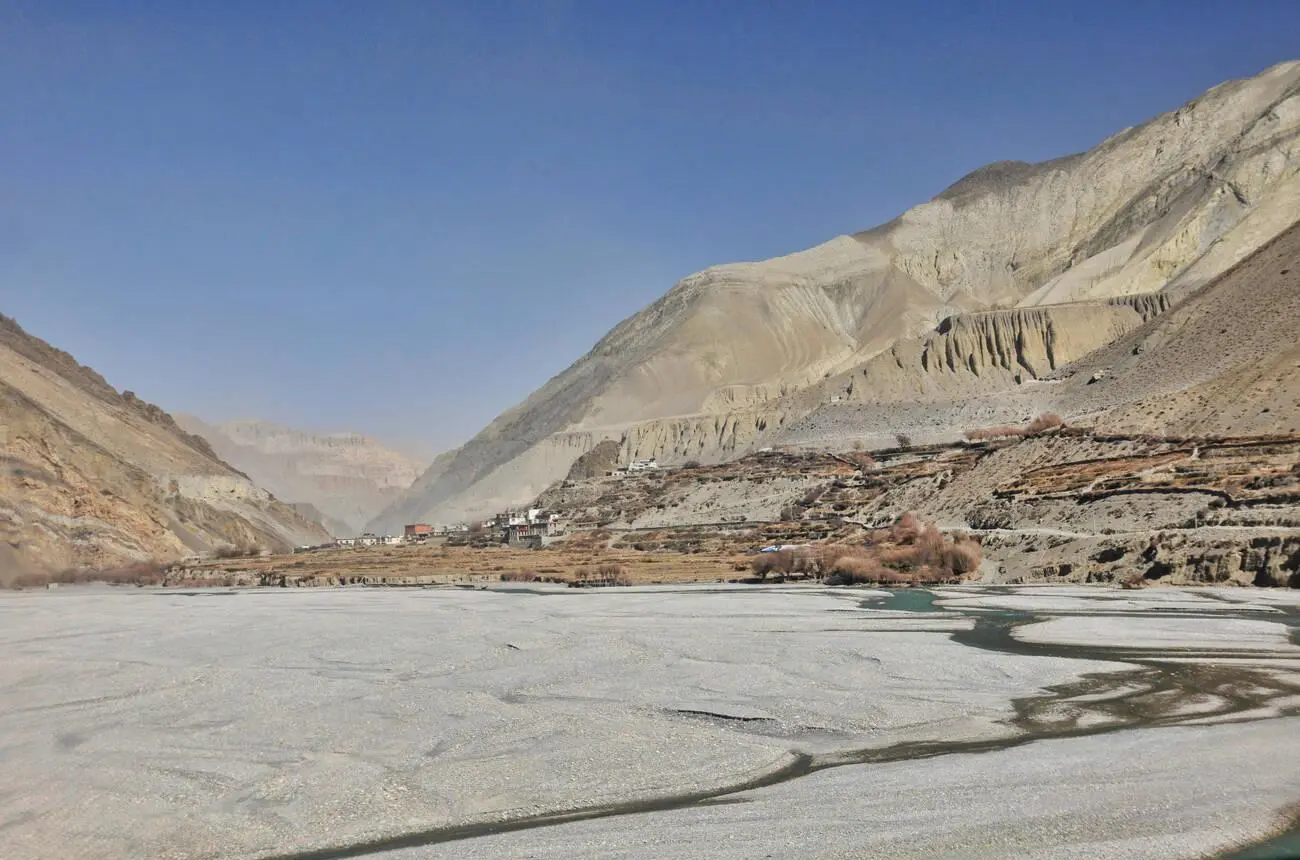
The Upper Mustang Overland Tour offered by Nepal Everest Trek is a unique journey into the hidden kingdom of Mustang, a region rich in Tibetan culture, ancient monasteries, and dramatic landscapes. This tour combines scenic drives, short flights, and cultural exploration, allowing travelers to experience the natural beauty of the Himalayas while immersing themselves in the local lifestyle. The journey begins in Kathmandu, where visitors are introduced to the rich history, architecture, and spiritual essence of Nepal’s capital before heading west to the picturesque city of Pokhara. From Pokhara, the adventure continues to the remote region of Upper Mustang via Jomsom, gradually ascending into the arid landscapes of the trans-Himalayan desert.
Travelers traverse scenic passes such as Nyi-La Pass, explore the ancient walled city of Lo-Manthang, and interact with locals in villages like Ghami and Ghiling. This overland tour is designed for those seeking cultural immersion, breathtaking mountain views, and a deeper understanding of Nepal’s Himalayan heritage. Along the way, participants witness stunning landscapes featuring snow-capped peaks, deep gorges, and high-altitude plateaus rarely visited by typical tourists.
The ideal time to visit Upper Mustang is during the spring (March to May) and autumn (September to November) seasons. During these months, the weather is generally stable, skies are clear, and temperatures are comfortable for both driving and high-altitude exploration. The landscape comes alive in spring with blooming flowers and lush valleys, while autumn offers crisp skies ideal for photography and panoramic mountain views.
Winter months (December to February) bring harsh, cold conditions and occasional road closures due to snow, making travel more challenging. Summer (June to August) is the monsoon season, which brings heavy rainfall in lower regions, landslides, and muddy roads that can disrupt the overland journey. Travelers should plan their visit around the best seasons to ensure a smooth and enjoyable experience.
Best Season Tips:
The Upper Mustang Overland Tour is considered moderate in difficulty, as it involves driving through high-altitude regions and occasional short hikes for exploration. Travelers should be prepared for long driving days, altitude changes, and a relatively dry climate that can be more demanding on the body. However, the tour is designed to minimize strenuous trekking while still providing access to remote villages and cultural sites.
Transportation includes:
Proper acclimatization is recommended, particularly for those traveling above 3,500 meters. Regular rest stops during drives and gradual elevation gain help reduce the risk of altitude sickness.
Nepal Everest Trek ensures comfortable accommodation and local cuisine throughout the Upper Mustang journey. Hotels in Kathmandu and Pokhara are modern, clean, and provide a restful environment, while in Mustang, guesthouses and lodges reflect traditional Tibetan architecture and hospitality. Meals include a mix of Nepali, Tibetan, and continental cuisine, catering to diverse dietary preferences.
Food and Accommodation Highlights:
This combination of comfort and authenticity ensures travelers enjoy both cultural immersion and convenience during their journey.
Visiting Upper Mustang requires special Restricted Area Permits, as it is a protected region with limited tourist access to preserve its culture and environment. Nepal Everest Trek assists travelers in obtaining all necessary permits before departure.
Permit Details:
Compliance with permit regulations ensures a smooth, legal journey while contributing to the preservation of Mustang’s unique heritage.
Nepal Everest Trek provides an expertly planned Upper Mustang Overland Tour combining adventure, culture, and comfort. With years of experience in organizing Himalayan tours, the company ensures safety, convenience, and personalized service for every traveler. From arranging flights and permits to offering knowledgeable guides and drivers, Nepal Everest Trek guarantees a seamless experience from start to finish.
Reasons to Choose Nepal Everest Trek:
Travelers can explore Upper Mustang confidently, knowing that every detail is managed by professionals who prioritize safety, comfort, and authentic experiences.
Upon your arrival at Tribhuvan International Airport in Kathmandu, you will be warmly welcomed by a representative from Nepal Everest Trek and transferred to your comfortable hotel. Take the rest of the day to relax and acclimatize to the altitude. In the evening, you can enjoy a short stroll around the vibrant streets of Thamel, where local shops, cafes, and traditional restaurants provide a taste of Kathmandu’s lively atmosphere. Your guide will brief you on the upcoming Upper Mustang adventure, ensuring all travel preparations are complete and comfortable.
Today, you will embark on a full-day exploration of Kathmandu’s UNESCO World Heritage Sites. Begin with the majestic Swayambhunath Stupa, also known as the Monkey Temple, offering panoramic views of the Kathmandu Valley. Continue to Kathmandu Durbar Square, where you can admire ancient palaces, temples, and intricate wood carvings. After lunch, visit Pashupatinath Temple, a sacred Hindu site on the banks of the Bagmati River, and Boudhanath Stupa, one of the largest stupas in Nepal. This cultural immersion provides a deep understanding of Nepalese traditions and history, setting the perfect tone for your Mustang journey.
After breakfast, enjoy a scenic drive of approximately 6–7 hours from Kathmandu to Pokhara, passing through terraced hills, lush forests, and charming villages. The drive offers occasional views of the Himalayan peaks in the distance, along with glimpses of rural Nepalese life along the highway. Upon arrival in Pokhara, check into your hotel and relax by the serene Phewa Lake. In the evening, you may enjoy a lakeside walk, explore local markets, or try traditional Nepali cuisine at a cozy restaurant, preparing for the early flight to Jomsom the next day.
In the morning, take a short scenic flight from Pokhara to Jomsom, offering stunning aerial views of the Annapurna and Dhaulagiri ranges. Upon arrival, begin a drive along the Kali Gandaki River to Kagbeni, the gateway to Upper Mustang. Kagbeni is a picturesque village where ancient Tibetan-influenced architecture meets modern life. Explore narrow cobbled streets, visit local gompas, and interact with villagers to gain insight into Mustang’s unique culture. Overnight in Kagbeni allows time to rest and acclimatize, as the journey ahead will gradually take you into higher altitudes and more remote landscapes.
Today’s journey takes you from Kagbeni to Ghami, crossing the Nyi-La Pass at 3,860 meters. The drive offers breathtaking views of Mustang’s barren, desert-like landscapes, deep canyons, and snow-capped peaks. Stop along the way to admire the panoramic vistas and capture photographs of the rugged terrain. Ghami, a historic village with traditional mud-brick houses and narrow lanes, is your destination for the night. Upon arrival, settle into a local guesthouse and explore the village, visiting monasteries and interacting with friendly locals who maintain Mustang’s ancient cultural traditions.
After breakfast, drive from Ghami to Lo-Manthang, the walled capital of Upper Mustang, known for its rich Tibetan heritage and ancient palaces. The road winds through arid landscapes, cliffs, and small villages, offering glimpses of Mustang’s unique architecture and lifestyle. Upon arrival in Lo-Manthang, take a leisurely stroll through its cobbled streets, observing traditional mud-brick houses, prayer wheels, and colorful flags fluttering in the wind. The town’s monastery, royal palace, and ancient fort provide a fascinating window into Mustang’s history. Overnight in Lo-Manthang allows time to acclimatize and prepare for local exploration the following day.
Spend a full day exploring Lo-Manthang and its surroundings. Visit the centuries-old royal palace, several local monasteries, and ancient caves that tell stories of Mustang’s Buddhist heritage. Walk through nearby villages like Chhoser and Dhakmar to experience the region’s traditional lifestyle, taste local foods, and interact with friendly residents. The high-altitude desert landscapes, colorful prayer flags, and peaceful monasteries make this day a spiritual and cultural immersion. Photography enthusiasts will especially enjoy capturing the dramatic scenery and unique architecture. Return to Lo-Manthang in the evening for an overnight stay and reflection on Mustang’s timeless charm.
Today, drive from Lo-Manthang to Ghiling, passing through barren valleys, high cliffs, and isolated settlements. Ghiling is a small village that offers an authentic glimpse into Mustang’s traditional life, where agriculture and livestock continue as primary livelihoods. Along the route, you may encounter nomadic herders, prayer walls, and ancient gompas tucked against the mountainsides. After arrival, explore the village and surrounding areas, appreciating the harmony between human life and the stark natural environment. Overnight in Ghiling provides a quiet retreat, allowing time to enjoy Mustang’s serene landscapes and starry night skies.
Begin your return journey from Ghiling to Jomsom, descending through the Kali Gandaki Valley. The drive is filled with scenic contrasts, from Mustang’s high desert plateaus to the greener, fertile valley near Jomsom. Stop along the route to enjoy the views of cliffs, rivers, and distant Himalayan peaks. Upon reaching Jomsom, you can explore the local bazaar and visit gompas before settling into your lodge for the night. This day marks a gradual transition from the remote Mustang landscape back to more accessible regions of Nepal.
In the morning, take a short flight back to Pokhara, enjoying stunning aerial views of the Annapurna range, deep gorges, and winding rivers. Upon arrival, check into your hotel and relax by the beautiful Phewa Lake. Spend the afternoon exploring Pokhara’s highlights, such as the lakeside promenade, Devi’s Fall, and the World Peace Pagoda, or simply unwind and enjoy the serene mountain views. This day allows you to rest after the high-altitude journey through Mustang while reflecting on the adventure and cultural experiences of the past week.
After breakfast, drive back to Kathmandu through scenic hills and rural landscapes. The journey offers another opportunity to admire Nepal’s diverse scenery, including terraced fields, traditional villages, and panoramic mountain views. Upon arrival in Kathmandu, check into your hotel and spend the evening shopping for souvenirs, enjoying a cultural dinner, or simply relaxing after your long overland adventure. This is the perfect time to savor Nepalese cuisine and reflect on the unique experiences of Upper Mustang.
On the final day, you will be transferred from your hotel to Tribhuvan International Airport for your departure flight. Depending on your flight schedule, there may be time for last-minute shopping or a brief walk through Kathmandu’s streets. As you leave Nepal, reflect on the unforgettable landscapes, rich culture, and unique experiences you’ve encountered on the Upper Mustang Overland Tour with Nepal Everest Trek. The memories of Mustang’s remote deserts, ancient monasteries, and warm local hospitality will remain with you long after your journey ends.
Although the Upper Mustang Overland Tour involves driving most of the route, visitors should have moderate physical fitness due to short walks, high-altitude stops, and occasional excursions in remote villages. Altitude acclimatization is important, as the tour reaches up to 3,860 meters at Nyi-La Pass. Nepal Everest Trek ensures a well-paced itinerary with adequate rest and acclimatization days. Participants with pre-existing heart, lung, or altitude-related conditions should consult a physician before booking the tour to ensure safety and comfort throughout the journey.
Yes, altitude sickness can be a concern because the tour reaches elevations of up to 3,860 meters at Nyi-La Pass. Symptoms may include headache, nausea, dizziness, and shortness of breath. Nepal Everest Trek designs the itinerary to allow gradual acclimatization, with sufficient rest days and moderate driving distances to reduce risk. Travelers are advised to stay hydrated, avoid alcohol, and inform guides immediately if they experience any symptoms. For extra precaution, some travelers bring altitude medication as recommended by a physician. Careful monitoring ensures a safe and enjoyable journey.
Yes, visiting Upper Mustang requires a special Restricted Area Permit (RAP) issued by the Nepalese government. This permit ensures controlled tourism to protect the fragile ecosystem and unique culture of Mustang. Nepal Everest Trek will assist you in obtaining the RAP along with a Trekkers’ Information Management System (TIMS) card if needed. The permit process requires providing personal details and passport copies in advance. Travelers are advised to arrange permits at least a few weeks prior to departure to avoid last-minute delays or rejections.
The ideal time to visit Upper Mustang is during the spring (March to May) and autumn (September to November) seasons. During these months, the weather is generally clear, allowing stunning views of the Himalayas and comfortable trekking conditions. Spring offers blooming flowers and vibrant landscapes, while autumn provides crisp skies and cooler temperatures. Nepal Everest Trek recommends avoiding the monsoon season (June to August) due to heavy rainfall, landslides, and potential flight cancellations, and the winter months (December to February) due to extreme cold and snow at higher elevations.
Upper Mustang has a cold desert climate, characterized by sunny days and chilly nights, especially at higher elevations. Temperatures can range from 20°C (68°F) during the day to below freezing at night in winter months. Spring and autumn offer the most pleasant weather, with daytime temperatures around 15–20°C (59–68°F) and nights between 0–5°C (32–41°F). Rainfall is minimal due to the rain-shadow effect, but strong winds can occur. Nepal Everest Trek advises packing layered clothing, warm jackets, hats, gloves, and sun protection to ensure comfort during day trips and high-altitude drives.
Nepal Everest Trek arranges a mix of comfortable hotels, lodges, and guesthouses throughout the Upper Mustang Overland Tour. In Kathmandu and Pokhara, you will stay in standard hotels with modern amenities. In Mustang, accommodation is generally in clean, locally run lodges or guesthouses, offering basic facilities such as hot showers (where available) and meals. Staying in these remote areas provides an authentic cultural experience while ensuring safety and comfort. Travelers should be prepared for simpler accommodations in Lo-Manthang and surrounding villages due to the region’s remote location.
The tour includes breakfast at hotels in Kathmandu and Pokhara, and all meals during the Upper Mustang overland journey. Meals in Mustang primarily feature Nepali and Tibetan cuisine, including rice, lentils, vegetables, and local bread. Nepal Everest Trek can accommodate most dietary requirements such as vegetarian, vegan, or gluten-free meals if informed in advance. However, options may be limited in remote villages, so it is recommended to bring snacks or personal dietary supplements for additional convenience.
The Upper Mustang Overland Tour is primarily conducted by private 4x4 vehicles, ensuring comfort on rough roads and high-altitude passes. Flights are included from Pokhara to Jomsom and back, reducing travel time and allowing scenic aerial views of the Himalayas. Nepal Everest Trek provides experienced drivers familiar with mountain roads and local conditions, prioritizing safety at all times. Short walks and village explorations are done on foot, providing cultural immersion while allowing flexibility for rest and acclimatization. Vehicles are spacious enough for small groups and luggage.
Communication and internet facilities are limited in Upper Mustang due to its remote location. Mobile phone networks may work in larger villages like Jomsom, Kagbeni, and Lo-Manthang, but signal strength can be weak and intermittent. Internet access is available in some guesthouses but may be slow. Nepal Everest Trek advises travelers to inform family and friends about limited connectivity and to carry offline maps, travel guides, and essential apps in advance. This limited connectivity also provides a chance to disconnect and immerse fully in the region’s serene and historic environment.
Packing appropriately is crucial for comfort and safety during the Upper Mustang Overland Tour. Essentials include warm clothing for cold nights, layered attire for variable daytime temperatures, comfortable walking shoes, a hat and sunglasses for sun protection, sunscreen, a reusable water bottle, personal medications, and a basic first-aid kit. Cameras or smartphones are recommended for photography. Nepal Everest Trek also suggests packing light luggage, as vehicle space is limited and some guesthouses have small storage areas. Being well-prepared ensures a smooth and enjoyable adventure through Mustang’s remote desert landscapes and culturally rich villages.