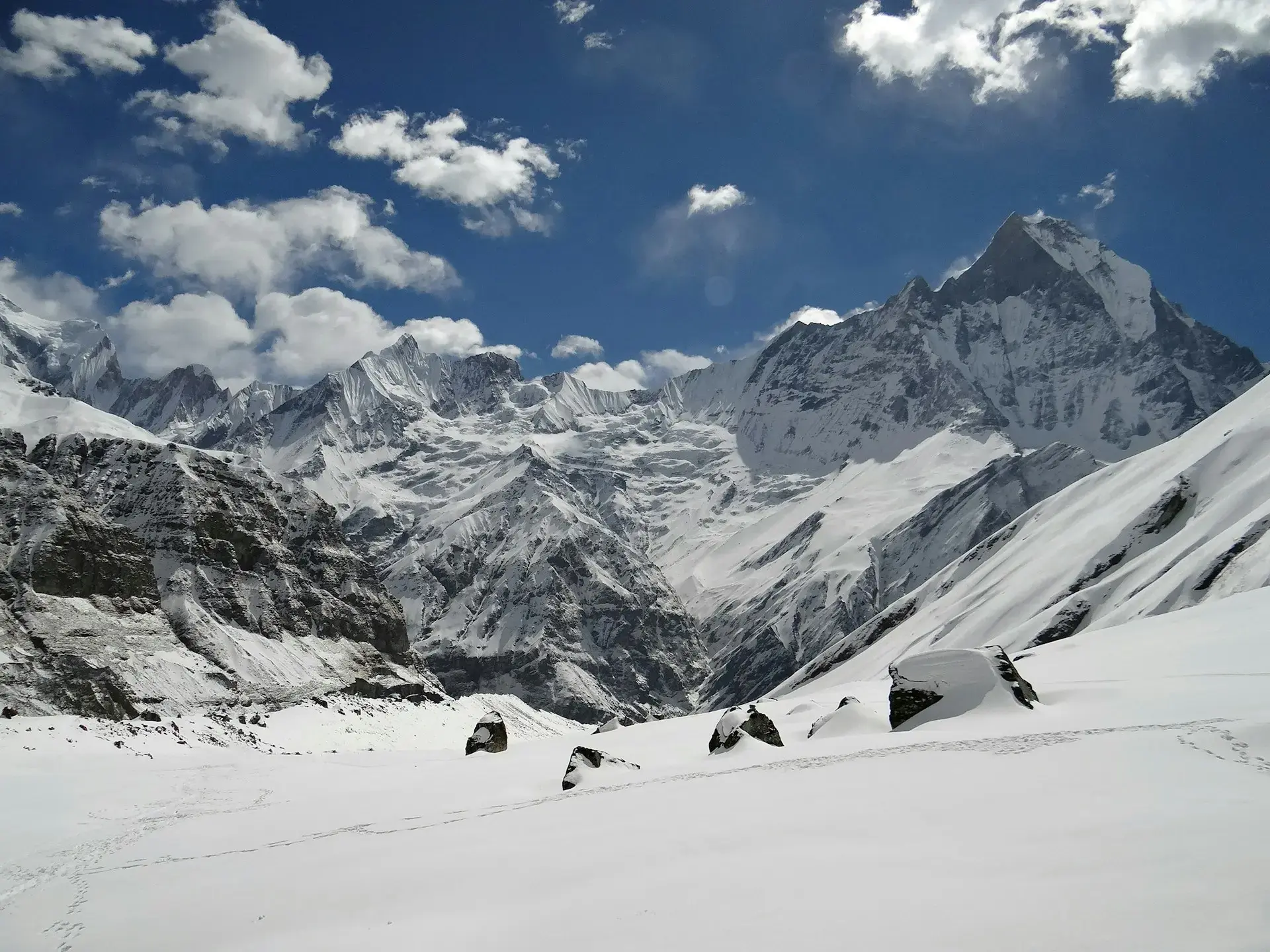
The Annapurna Base Camp Trek is one of Nepal’s most rewarding Himalayan adventures, combining mountain scenery, traditional villages, lush forests, dramatic landscapes, and the unforgettable experience of reaching Annapurna Base Camp at an elevation of 4,130 meters (13,546 feet). Organized by Nepal Everest Trek, this journey offers trekkers an opportunity to explore the Annapurna region while gradually gaining altitude through diverse terrain.
The itinerary typically takes 13 days, including arrival and departure in Kathmandu, sightseeing, transportation between Kathmandu and Pokhara, and the trekking journey from Nayapul through Ghandruk, Chomrong, Dovan, and Deurali to Annapurna Base Camp. After reaching ABC, the route descends through Bamboo and Jhinu Danda before returning to Pokhara and Kathmandu.
Reach Annapurna Base Camp at 4,130m.
Experience spectacular Annapurna and Machhapuchhre mountain views.
Trek through forests, terraced hills, and traditional villages.
Explore Gurung culture and Himalayan communities.
Enjoy natural hot springs at Jhinu Danda.
Combine adventure with Kathmandu and Pokhara sightseeing.
Introduction to the Annapurna Base Camp Trek
The Annapurna Base Camp Trek takes you deep into the heart of the Annapurna Sanctuary, a naturally enclosed mountain amphitheater surrounded by some of Nepal’s most impressive peaks. The trail passes through changing landscapes, beginning in lower-altitude villages and forests before entering the high Himalayan environment around the base camp.
One of the appealing features of the trek is its variety. Rather than experiencing the same landscape throughout the journey, trekkers encounter rhododendron forests, waterfalls, stone stairways, terraced farmland, mountain settlements, and increasingly dramatic views as they approach ABC. The cultural experience is equally important, with opportunities to interact with local communities and observe traditional Himalayan lifestyles.
What you can experience:
Himalayan scenery and mountain panoramas.
Traditional Gurung villages.
Rhododendron and bamboo forests.
Waterfalls, rivers, and mountain streams.
High-altitude landscapes around the sanctuary.
A gradual transition from subtropical hills to alpine terrain.
Why Annapurna Base Camp Is So Popular
Annapurna Base Camp is popular because it provides an impressive Himalayan experience within a relatively compact trekking itinerary. The route offers a combination of natural beauty and cultural encounters without requiring the extremely long expedition-style commitment associated with some other high-altitude Himalayan journeys.
The trek also has a strong sense of progression. Each trekking day introduces a different environment, and the surrounding mountains become increasingly prominent as you move toward the sanctuary. Reaching ABC provides a memorable climax, with towering peaks surrounding the base camp and creating an extraordinary high-mountain setting.
Reasons trekkers choose ABC:
Diverse scenery within one trek.
Access to spectacular Himalayan mountain views.
Rich local culture and village experiences.
A rewarding high-altitude destination.
Tea houses and lodges along much of the route.
Opportunity to experience both mountain landscapes and natural hot springs.
Best Time to Trek to Annapurna Base Camp
The most popular periods for the Annapurna Base Camp Trek are spring and autumn. Spring, particularly March through May, generally brings pleasant trekking conditions, blooming rhododendrons, and good opportunities for mountain views. Autumn, especially October and November, is also widely preferred because of generally stable weather and clear mountain visibility.
Winter can bring colder temperatures and snow at higher elevations, while the monsoon season from roughly June to September can bring rain, cloudy conditions, slippery trails, and reduced mountain visibility. Conditions can vary from year to year, so trekkers should check current weather and trail information before departure.
Seasonal considerations:
Spring: Mild conditions, flowering rhododendrons, good trekking atmosphere.
Autumn: Generally clear skies and favorable mountain visibility.
Winter: Cold temperatures and possible snow at higher elevations.
Monsoon: Rain, clouds, muddy trails, and potentially limited visibility.
How Difficult Is the Annapurna Base Camp Trek?
The Annapurna Base Camp Trek is generally considered a moderate to challenging high-altitude trek. It does not require technical mountaineering skills, but trekkers should be prepared for long walking days, steep stone steps, uneven terrain, and significant elevation gain. The highest point of the itinerary is ABC at 4,130 meters, where altitude becomes an important consideration.
Good physical preparation can make the experience more comfortable. Regular walking, hiking, stair climbing, and cardiovascular exercise before the trek can help build endurance. It is also important to maintain a comfortable pace, stay hydrated, eat adequately, and pay attention to symptoms associated with altitude.
Important preparation points:
Prepare for several hours of walking each day.
Practice uphill and downhill hiking.
Carry suitable trekking footwear and clothing.
Increase altitude gradually according to the itinerary.
Stay hydrated and maintain regular meals.
Take altitude-related symptoms seriously.
Annapurna Base Camp Trek Itinerary and Duration
The itinerary provided by Nepal Everest Trek covers 13 days, beginning with arrival in Kathmandu and ending with final departure. The trekking section starts after traveling to Pokhara and Nayapul, then follows the route through Ghandruk, Chomrong, Dovan, and Deurali before reaching Annapurna Base Camp. The return journey descends through Bamboo and Jhinu Danda before continuing to Pokhara.
The itinerary balances trekking with transportation and sightseeing days. Kathmandu provides an introduction to Nepal’s cultural heritage, while Pokhara serves as the gateway to the Annapurna region. The gradual ascent toward ABC and the subsequent descent make the itinerary suitable for travelers looking for a structured Himalayan trekking experience.
13-day itinerary at a glance:
Day 1: Arrival in Kathmandu (1,300m) and transfer to hotel.
Day 2: Kathmandu sightseeing.
Day 3: Tourist bus from Kathmandu to Pokhara.
Day 4: Drive to Nayapul and trek to Ghandruk (1,940m).
Day 5: Trek from Ghandruk to Chomrong (2,170m).
Day 6: Trek from Chomrong to Dovan (2,600m).
Day 7: Trek from Dovan to Deurali (3,230m).
Day 8: Trek from Deurali to Annapurna Base Camp (4,130m).
Day 9: Trek from ABC to Bamboo (2,310m).
Day 10: Trek from Bamboo to Jhinu Danda (1,780m).
Day 11: Trek to Nayapul and drive to Pokhara.
Day 12: Tourist bus from Pokhara to Kathmandu.
Day 13: Final departure.
This itinerary allows trekkers to experience the changing landscapes of the Annapurna region while building toward the main objective: standing at Annapurna Base Camp surrounded by the Himalayan peaks.
What the Scenery Is Like Along the Trail
The Annapurna Base Camp Trek with Nepal Everest Trek takes you through a remarkable variety of Himalayan landscapes. The journey begins among green hills, terraced farmland, rivers, and traditional settlements before entering dense forests of rhododendron, bamboo, and oak. As the trail gains elevation, the vegetation gradually changes, and the surrounding mountains become increasingly prominent.
Near Dovan, Deurali, and the Annapurna Sanctuary, the scenery becomes more dramatic, with cliffs, waterfalls, rocky trails, and snow-covered peaks. Approaching Annapurna Base Camp at 4,130 meters, trekkers enter a high-mountain environment surrounded by some of the region's most impressive peaks.
Scenery highlights:
Lush forests and rhododendron-covered hills.
Terraced farmland and mountain valleys.
Waterfalls, rivers, and suspension bridges.
Views of Annapurna and Machhapuchhre.
Dramatic landscapes around the Annapurna Sanctuary.
Snow-covered Himalayan peaks near ABC.
Villages, Culture, and Local Life on the Trek
One of the most memorable parts of the Annapurna Base Camp Trek is the opportunity to experience traditional Himalayan village life. The route passes through communities such as Ghandruk and Chomrong, where travelers can see stone houses, terraced fields, local shops, monasteries, and everyday activities that reflect the region's mountain culture.
Ghandruk is particularly well known for its Gurung heritage and traditional village atmosphere. Along the trail, trekkers stay at locally operated tea houses and interact with guides, porters, lodge owners, and residents. These encounters provide a more personal understanding of life in the Annapurna region beyond the mountain scenery.
Cultural experiences include:
Visiting traditional mountain villages.
Experiencing Gurung culture and hospitality.
Seeing traditional houses and terraced farmland.
Staying in locally operated tea houses.
Meeting local guides, porters, and residents.
Observing everyday life in Himalayan communities.
What to Expect at Annapurna Base Camp
Reaching Annapurna Base Camp at 4,130 meters (13,546 feet) is the central highlight of the trek. After ascending from Deurali, the landscape opens into the Annapurna Sanctuary, where massive Himalayan peaks rise dramatically around the valley. The atmosphere becomes quieter and more alpine as you approach the base camp.
At ABC, you can spend time taking photographs, appreciating the surrounding mountains, and experiencing the unique feeling of being surrounded by high Himalayan terrain. Temperatures can be considerably colder than at lower elevations, particularly in the morning, evening, and during winter, so warm clothing is essential.
At Annapurna Base Camp, expect:
An elevation of 4,130 meters.
Panoramic Himalayan mountain views.
A colder and more exposed environment.
Opportunities for sunrise and mountain photography.
A memorable high-altitude trekking experience.
Time to rest and appreciate the Annapurna Sanctuary.
Accommodation and Food Along the Trail
During the trek, Nepal Everest Trek generally uses tea houses and trekking lodges along the established route. Accommodation is typically simple and practical, with rooms commonly furnished with beds and basic bedding. Facilities become more basic as you travel toward higher elevations, and bathrooms may be shared at some locations.
Meals along the trail are designed to provide energy for long trekking days. Tea houses commonly serve dishes such as dal bhat, noodles, rice, pasta, soups, vegetables, eggs, bread, and other simple meals. Hot tea, coffee, and other beverages are also widely available, although prices generally increase with altitude because supplies have to be transported farther into the mountains.
What to expect:
Simple tea-house accommodation.
Basic rooms and shared facilities at some stops.
Dal bhat and other traditional Nepali meals.
Noodles, rice, pasta, soups, and vegetables.
Tea, coffee, and other hot beverages.
Increasing food and accommodation costs at higher elevations.
Permits and Documents You Need
Trekkers heading to Annapurna Base Camp need the appropriate trekking documentation before entering the Annapurna region. The main documents commonly associated with this trek include the Annapurna Conservation Area Permit (ACAP) and the Trekkers' Information Management System (TIMS) card, subject to the current rules and procedures in Nepal.
Permit requirements and trekking regulations can change, so travelers should confirm the latest requirements before departure. Nepal Everest Trek can assist with the relevant trekking permits and documentation as part of the trip preparation, while trekkers should carry their passport and necessary travel documents throughout the journey.
Important documents and preparations:
Valid passport.
Appropriate Nepal entry visa or travel authorization.
Annapurna Conservation Area Permit (ACAP).
TIMS card, where currently required.
Passport-size photographs if required for documentation.
Copies or digital backups of important travel documents.
Packing List for the Annapurna Base Camp Trek
Packing appropriately is an important part of preparing for the Annapurna Base Camp Trek with Nepal Everest Trek. The route passes through different climates, from warm lower valleys to cold, high-altitude environments around Annapurna Base Camp at 4,130 meters. Instead of carrying excessive items, trekkers should focus on lightweight, practical, and weather-appropriate gear.
Layering is particularly useful because temperatures can change considerably during the day. A comfortable backpack, good trekking boots, warm clothing, rain protection, and personal essentials can make the trek more comfortable. Your packing requirements may also vary depending on the season and whether you use a porter.
Essential items include:
Comfortable, broken-in trekking boots.
Moisture-wicking base layers and warm mid-layers.
Down or insulated jacket for high elevations.
Waterproof jacket and trousers.
Warm hat, gloves, and trekking socks.
Sunglasses, sunscreen, and lip balm.
Sleeping bag suitable for cold mountain conditions.
Reusable water bottle or hydration system.
Headlamp with spare batteries.
Personal first-aid and essential medications.
Trekking poles.
Passport, permits, and travel documents.
Small daypack and waterproof backpack covers.
Altitude and Acclimatization: What to Expect
Altitude is one of the major considerations on the Annapurna Base Camp Trek. The journey rises from the lower hills to 4,130 meters (13,546 feet) at ABC, so the body needs time to adapt to decreasing oxygen availability. The itinerary from Nepal Everest Trek provides a gradual ascent through Ghandruk, Chomrong, Dovan, and Deurali before reaching the base camp.
Trekkers may experience changes in breathing, appetite, sleep, and energy levels as they gain elevation. Staying hydrated, walking at a steady pace, eating regularly, and avoiding unnecessary overexertion can help with the adjustment. If symptoms become severe or worsen, descending to a lower elevation and seeking medical assistance are important.
Altitude-management tips:
Ascend gradually and maintain a comfortable pace.
Drink enough water throughout the day.
Avoid excessive alcohol at altitude.
Get adequate rest and sleep.
Eat regular, energy-rich meals.
Tell your guide immediately about concerning symptoms.
Descend if serious altitude-related symptoms develop.
Safety Tips for Trekking to Annapurna Base Camp
Safety on the Annapurna Base Camp Trek involves preparing for changing weather, uneven trails, altitude, and long walking days. Some sections contain steep stone steps and rocky terrain, while higher sections can become cold or snowy depending on the season. Appropriate footwear and careful walking are therefore important.
Traveling with an experienced guide and following the planned itinerary can also make the journey more organized. Trekkers should check weather conditions, carry essential personal supplies, stay hydrated, and avoid rushing the ascent. Nepal Everest Trek can help coordinate the logistics of the journey, but each trekker should remain attentive to their own condition throughout the trip.
Key safety practices:
Check weather and trail conditions regularly.
Walk carefully on steep and slippery sections.
Stay with your trekking group or follow your guide's instructions.
Keep emergency contacts and important documents accessible.
Carry sufficient water and basic personal medication.
Protect yourself from sun exposure at higher elevations.
Take altitude symptoms seriously.
Follow local conservation and trekking regulations.
Estimated Cost of the Annapurna Base Camp Trek
The cost of an Annapurna Base Camp Trek depends on several factors, including the trekking package, duration, transportation, accommodation, guide and porter services, permits, season, and personal spending. A package arranged by Nepal Everest Trek may include some or most of the essential trekking logistics, while travelers may need to budget separately for items such as international flights, travel insurance, personal shopping, snacks, tips, and additional expenses.
Costs can also vary according to accommodation preferences and transportation choices. Food and beverages generally become more expensive at higher elevations because supplies need to be transported into remote mountain areas. For an accurate current price, travelers should request a detailed quotation from Nepal Everest Trek that clearly explains inclusions and exclusions.
Typical expenses to consider:
Trekking package and operator services.
Accommodation in Kathmandu, Pokhara, and tea houses.
Guide and porter services.
Trekking permits and required documentation.
Kathmandu–Pokhara transportation.
Meals and beverages during the trek.
Travel insurance and emergency coverage.
Personal gear and equipment.
Tips and personal expenses.
Final Thoughts: Is Annapurna Base Camp Right for You?
The Annapurna Base Camp Trek offers a combination of mountain scenery, cultural experiences, changing landscapes, and a rewarding high-altitude destination. With a 13-day itinerary, trekkers can travel from Kathmandu to Pokhara, enter the Annapurna region, walk through traditional villages and forests, reach 4,130-meter Annapurna Base Camp, and descend through the Himalayan landscape before returning to Pokhara and Kathmandu.
For travelers considering the journey with Nepal Everest Trek, preparation is an important part of the experience. A reasonable level of fitness, suitable equipment, awareness of altitude, and willingness to walk for several hours on consecutive days can help make the trek more enjoyable. The experience ultimately combines physical effort with cultural discovery and some of Nepal's most impressive mountain landscapes.
The trek may suit travelers who:
Enjoy multi-day mountain hiking.
Want to experience Nepal's Himalayan landscapes.
Are interested in village life and local culture.
Can comfortably handle sustained uphill and downhill walking.
Are prepared for high-altitude conditions.
Want to experience Annapurna Base Camp firsthand.
Prefer a structured trekking itinerary with organized logistics.